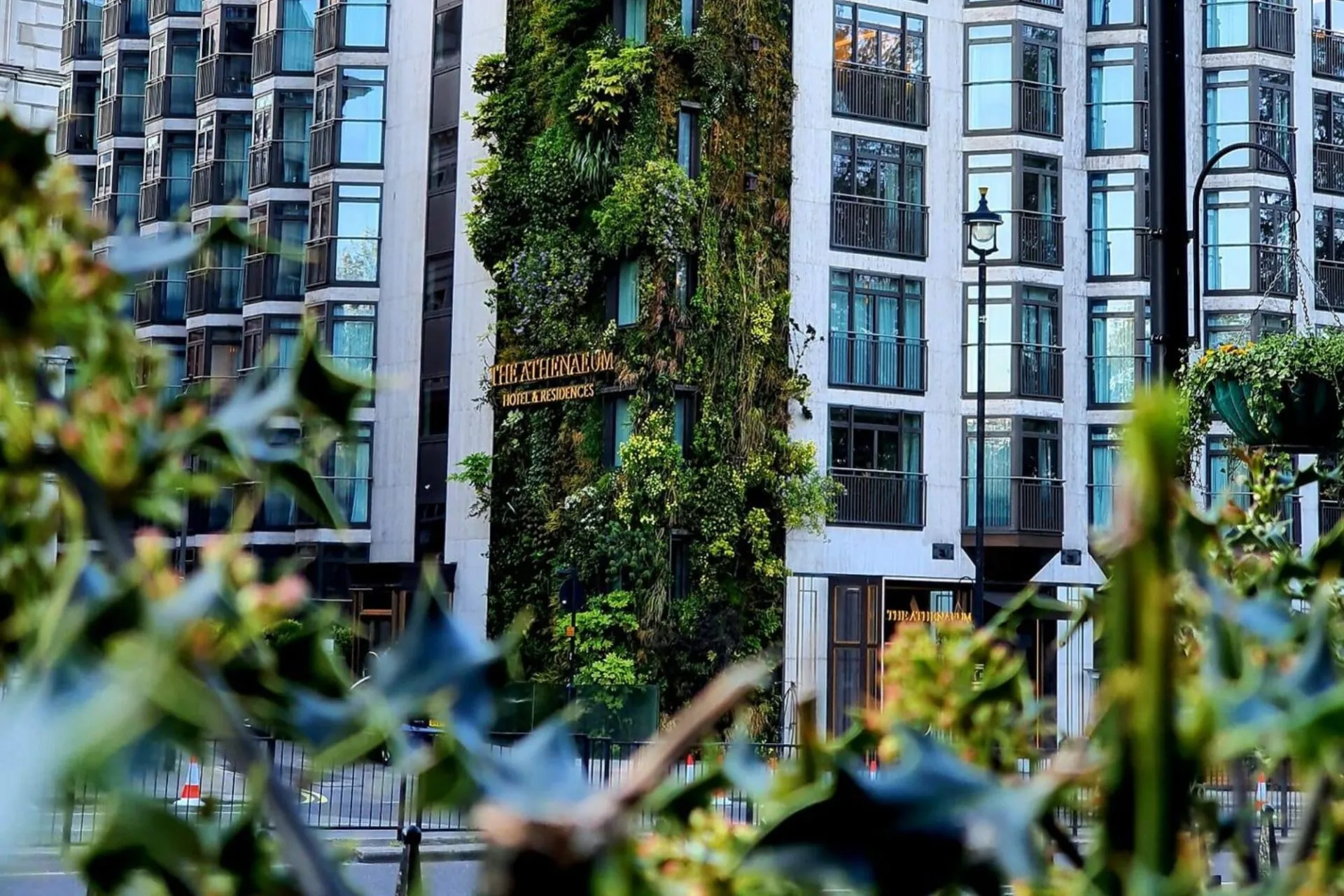
The Athenaeum Hotel & Residences has carried out an £80,000 reinvestment to replant and refresh its iconic Living Wall, reinforcing the hotel’s long-standing commitment to sustainability, biodiversity and green urban design. The refurbishment was undertaken in partnership with Daniel Bell Vertical Garden, specialists in living wall installations and maintenance.
Spanning an impressive 329 square metres, The Athenaeum’s Living Wall has been a landmark feature for nearly twenty years. The wall houses a variety of plants equivalent to 16.5 medium-sized trees, delivering notable environmental benefits. Each year, the wall removes an estimated 757kg of CO₂ and produces 559kg of oxygen, supporting air purification in one of London’s busiest districts.
The recent refresh retains many of the original plantings, still thriving two decades on, whilst introducing complementary varieties selected for biodiversity and to enrich the texture and colours of the wall. New species include Viburnum tinus, Erigeron ‘Lavender Lady’, Pyracantha ‘Orange Glow’, Ligustrum vicaryi, and Origanum vulgare, each chosen for their strong year-round structure, extended flowering periods, ecological value, and suitability to London’s changing urban climate.
The wall provides nectar for pollinators, berries for small birds, and an evergreen cover that adds depth and colour. More than 1,000 Narcissus bulbs were also added to create vibrant spring displays, adding to the wall’s seasonal rhythm.
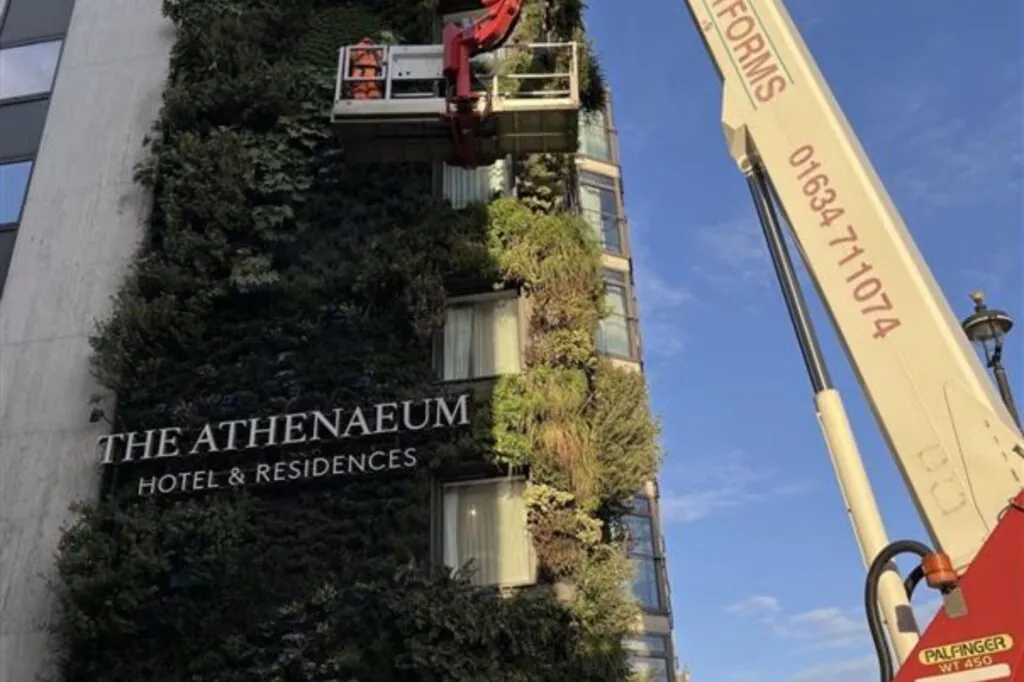
Edward Bracken, General Manager at The Athenaeum Hotel & Residences comments: “Our Living Wall has been part of the hotel’s identity for nearly two decades, and this significant replanting reflects our continued commitment to sustainability and the well-being of our neighbourhood. Investing in this beautiful Living Wall not only enhances biodiversity and air quality but also ensures that the wall remains an inspiring and uplifting presence for our guests, team, and the wider community.”
Daniel Bell, Director of DBVG, adds: “This is the oldest example of a vertical garden in the UK. It shows that a low-tech approach, using recycled textiles as the planting medium, absolutely works. We’re very proud to have created something so enduring and sustainable, and to continue using recycled materials in our installations. We use exactly the same technique to this day.”